

What Is Progressive Overload? (And Why It’s the Reason You’re Not Getting Stronger)
If you’ve been training consistently — showing up, doing the work, not skipping days — and your results have stalled, there’s a good chance the issue isn’t effort. It’s programming.

Specifically, it’s the absence of something called progressive overload.
Progressive overload is the single most important principle in strength training. It’s what separates people who get noticeably stronger every few weeks from people who feel like they’re spinning their wheels doing the same workout for months. And once you understand it, you’ll never think about your training the same way again.
What Progressive Overload Actually Means
Progressive overload means systematically increasing the demand on your body over time so it’s continually forced to adapt.
Here’s the basic biology: your muscles don’t grow stronger from exercise itself. They grow stronger in response to recovery from exercise. When you challenge a muscle beyond what it’s used to — heavier weight, more reps, less rest — it breaks down slightly. During recovery, it rebuilds stronger than before to handle that load next time.
The key phrase is beyond what it’s used to.
If you do the same workout with the same weight for the same number of reps every single week, your body adapts to that demand and stops changing. The stimulus that produced results in month one produces nothing by month three — not because you’re doing anything wrong, but because your body has caught up to the challenge.
Progressive overload is the solution: you keep raising the bar, literally and figuratively, so your body always has something to adapt to.
The Different Ways to Apply Progressive Overload
Most people think progressive overload just means lifting heavier. That’s one way to do it — but it’s not the only way, and for beginners it’s not always the right starting point.
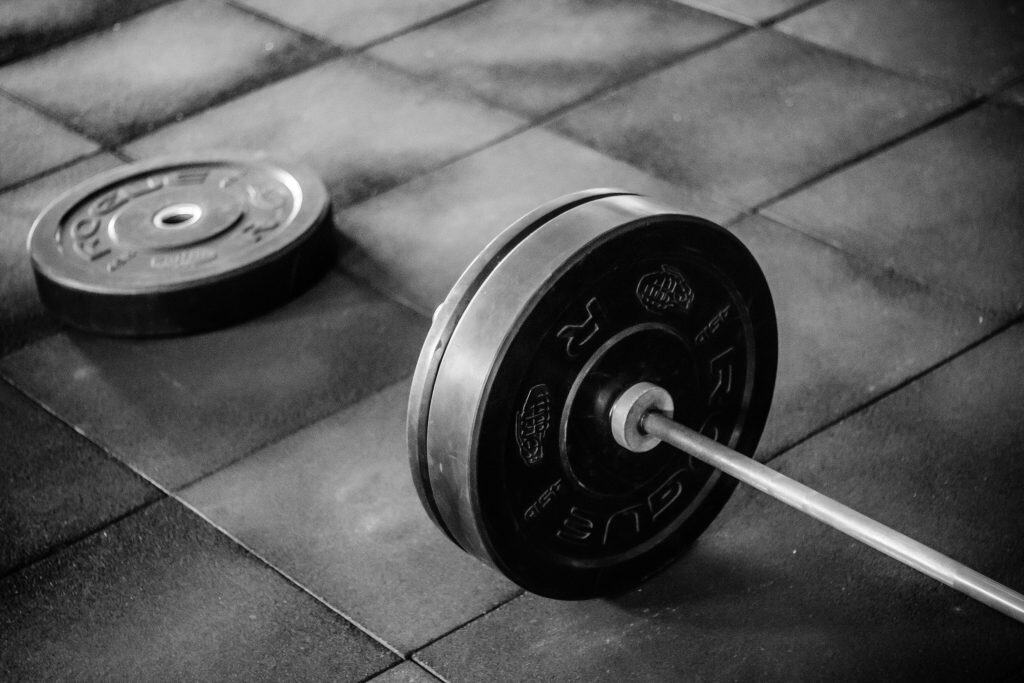
Here are the main levers you can pull:
Add Weight
The most straightforward method. If you squatted 95 lbs for 3 sets of 8 last week, try 100 lbs this week. Small, consistent weight increases over time produce large results over months.
A common beginner guideline is to add 5 lbs per week on lower body lifts (squat, deadlift, leg press) and 2.5 lbs per week on upper body lifts (bench, overhead press, row). These are small enough to be achievable but large enough to drive adaptation.
Add Reps
If adding weight feels like too big a jump, add a rep instead. If you did 3 sets of 8 last week, try 3 sets of 9. Once you can hit your target rep range comfortably with good form, then add weight and bring the reps back down.
Add Sets
Going from 3 sets of an exercise to 4 sets increases total training volume, which is a form of progressive overload. This works well when you’ve been at the same weight and rep range for a while and want to increase stimulus without changing the load.
Reduce Rest Time
Shortening the rest period between sets makes the same workout harder. If you were resting 90 seconds, try 75. Your heart rate stays higher, your muscles get less recovery between sets, and the metabolic demand increases.
Improve Range of Motion
This one is underrated. A deeper squat, a fuller stretch at the bottom of a Romanian deadlift, or a complete lockout at the top of a press — improving range of motion increases the work your muscle does per rep. Better form often produces more stimulus than more weight.
Improve Quality
Sometimes progression isn’t about numbers at all. Doing the same lift with better control, more intentional muscle engagement, and less momentum is a meaningful upgrade. This is especially true for beginners who are still learning movement patterns.
How to Track Progressive Overload
You can’t manage what you don’t measure. If you’re not logging your workouts, you have no way of knowing whether you’re actually progressing — and no way to identify when you’ve stalled.
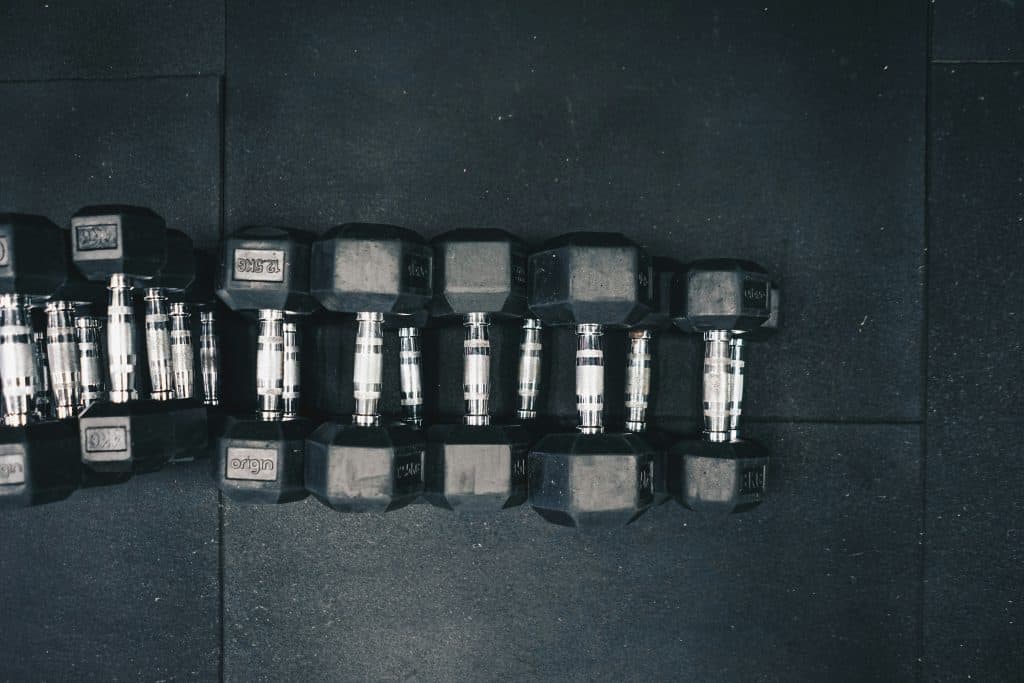
The minimum you should track for each session:
- Exercise name
- Weight used
- Sets completed
- Reps per set
A basic notebook works fine. So does the Notes app on your phone. The format doesn’t matter — consistency does.
When you look back at your log from four weeks ago and you’re lifting more weight, doing more reps, or completing more volume, you have objective proof that the training is working. When nothing has changed in four weeks, that’s your signal to adjust something.
Common Mistakes That Stall Progress
Jumping Weight Too Quickly
Adding too much load too fast leads to form breakdown, injury risk, and workouts you can’t complete with the right stimulus. Small, consistent increases beat big jumps followed by setbacks.
Random Programming
Doing different exercises every session makes it nearly impossible to apply progressive overload, because you never have a baseline to improve on. A structured program — one where you repeat the same core movements week to week — is what allows you to track and increase load systematically.
Skipping Deload Weeks
Your body needs periodic recovery to consolidate the adaptations from hard training. Skipping deload weeks in pursuit of more progress is one of the most common reasons people plateau. A week of reduced volume every 4–8 weeks isn’t a step backward — it’s what allows you to keep stepping forward.
Not Eating Enough to Recover
Progressive overload is a stimulus, and your body needs fuel to respond to it. If you’re consistently under-eating — especially on protein — your muscles can’t rebuild effectively between sessions, and progress stalls regardless of how well you’re programming.
What Progressive Overload Looks Like Over Time
To make this concrete, here’s a simple example of how progressive overload might look across eight weeks on the back squat:
| Week | Weight | Sets | Reps | Notes |
|---|---|---|---|---|
| 1 | 95 lbs | 3 | 8 | Establishing baseline, focus on form |
| 2 | 100 lbs | 3 | 8 | Small weight increase |
| 3 | 100 lbs | 3 | 9 | Added a rep |
| 4 | 105 lbs | 3 | 8 | Back to 8 reps, new weight |
| 5 | 105 lbs | 4 | 8 | Added a set |
| 6 | 110 lbs | 4 | 8 | Weight increase |
| 7 | 115 lbs | 4 | 6 | Heavier load, lower reps (strength phase) |
| 8 | Deload | 3 | 8 | 60–65% effort, recovery week |
Eight weeks in, this person went from squatting 95 lbs to working with 115 lbs — a 21% increase in load, achieved through small, intentional steps, not one big leap.
This kind of progress is completely realistic for most people in their first year of consistent, structured training.
Why Most People Don’t Apply It (And How to Start)
The honest reason most people don’t apply progressive overload is that they don’t have a plan. They show up to the gym with a general idea of what they want to work on, choose exercises based on what’s available or what feels good that day, and repeat more or less the same session until they get bored and switch things up.
That’s not a criticism — it’s how most people start. But it’s also why most people feel like they’re working hard without going anywhere.
The fix is simple: follow a structured program, log your numbers, and increase the challenge every week by one small increment. You don’t need to add weight every single session forever — progress naturally slows over time, and more advanced lifters make gains over months rather than weeks. But the principle stays the same at every level.
How We Apply This at Peak Fitness SLO
Every program our trainers build is structured around progressive overload. No matter who you’re working with, our trainers ensure your sessions are designed to build on each other — not just feel hard in the moment, but create measurable improvement over weeks and months.
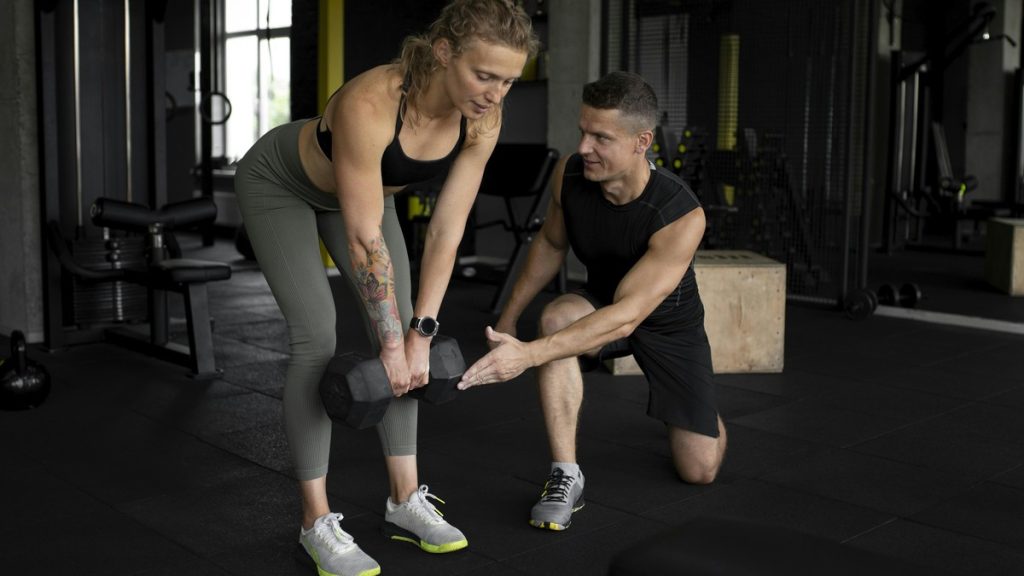
If you’ve been training on your own and aren’t sure whether your program is built for progression, that’s one of the most valuable things a single session with a trainer can clarify. We can assess where you are, identify where the gaps are, and help you build a plan that actually moves the needle.
If you’ve been following our 8-week summer strength plan, you’ve already been applying progressive overload — the four-phase structure is built around it. This post is the theory behind why that program is designed the way it is.
Ready to train smarter? Email us at hello@PeakFitnessSLO.com to set up a meet & greet with one of our trainers.
Peak Fitness SLO is located at 81 Higuera Street, Suite 130, San Luis Obispo. Open 24/7/365 for members. Voted Best Fitness Center 2026 by the SLO Tribune.