

How to Build a Workout Routine That Actually Sticks
Most people don’t fail at fitness because they lack motivation. They fail because they built a routine designed for their ideal life instead of their actual one.
You sign up for a 5-day program because you’re fired up — then miss two days in week two, feel behind, and quietly abandon the whole thing. Sound familiar?
Building a routine that lasts isn’t about willpower. It’s about design. Here’s how to build one that works for your schedule, your goals, and your real life.

Step 1: Start With Your Schedule, Not Your Goals
Most people start with the goal — lose weight, build muscle, get stronger — and then try to force a workout plan around it. This is backwards.
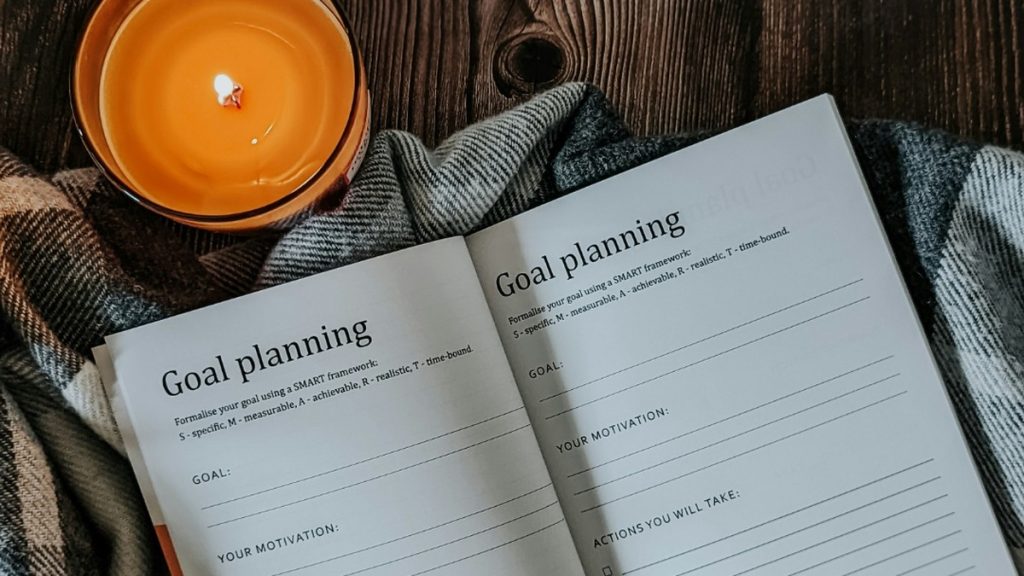
Open your calendar and look at the next two weeks. Find the days and times you can realistically, consistently get to the gym. Not the days when everything goes perfectly — the average weeks, with the commute, the work deadlines, the family stuff.
If you can commit to 3 days a week, build a 3-day program. A consistent 3-day routine will outperform a 5-day program you quit in three weeks every single time. Research on training frequency consistently shows that consistency over time is the greatest predictor of results — more than any specific program or split.
Aim for at least 48 hours of rest between sessions working the same muscle groups. Monday, Wednesday, and Friday is a classic starting point for good reason.
Step 2: Choose the Right Training Split
A training split is simply how you organize which muscle groups you train on which days. Pick one that matches your available days.
If You Can Train 2–3 Days Per Week
Full-body training is your best option. Each session works all major muscle groups — upper body push and pull, lower body, core. You get more practice with each movement pattern per week, which drives faster strength gains and skill development, especially for newer lifters.
A simple 3-day full-body schedule:
- Monday: Full body (squat, hinge, push, pull, core)
- Wednesday: Full body (different exercise variations)
- Friday: Full body (build on Monday with added load or reps)
If You Can Train 4 or More Days Per Week
An upper/lower split becomes viable. Four days per week, you train upper body twice and lower body twice, which allows higher volume per muscle group while still providing adequate recovery between sessions.
For most people starting or restarting a routine, 3-day full-body is the right place to begin. Add days as the habit solidifies — not before.
Step 3: Build Around the Big Lifts
A common mistake is anchoring a routine around machines and isolation exercises — leg extensions, cable flyes, bicep curls. These have their place, but they shouldn’t be the foundation.
Your routine should be built around compound movements: exercises that involve multiple joints and muscle groups at once. These give you the most return on training time and drive the majority of strength and muscle gains.
The core patterns to include every week:
- Squat pattern: barbell back squat, goblet squat, Bulgarian split squat
- Hinge pattern: deadlift, Romanian deadlift, hip thrust
- Push: bench press, overhead press, push-up variations
- Pull: pull-up or lat pulldown, barbell or dumbbell row
- Carry: farmer’s carry, suitcase carry
Start each session with one or two compound lifts when your energy is highest. Add isolation work — curls, tricep extensions, lateral raises — at the end as accessories.

Step 4: Plan for Progression, Not Just Variety
One of the biggest reasons routines stall is because people chase variety instead of progression. Switching exercises every week feels engaging, but it prevents you from getting meaningfully better at anything.
Stick with the same exercises for at least 4–6 weeks. Track your weights, reps, and sets. Then apply progressive overload — systematically increasing the challenge over time by adding weight, reps, or volume.
This is exactly the framework behind our 8-week summer strength program. Progressive structure doesn’t have to be complicated, but it has to be intentional. Without it, you’re exercising — not training.
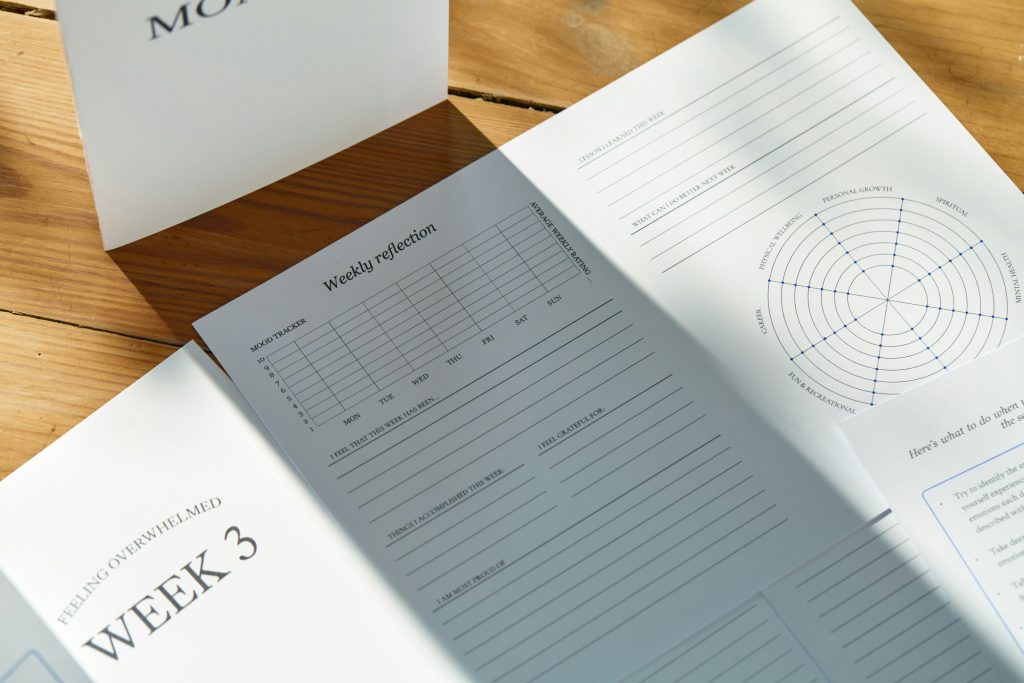
Keep a simple training log. A notes app, a spreadsheet, or a paper notebook all work. The habit of tracking is what matters.
Step 5: Make It Impossible to Quit
The best-designed program won’t survive contact with a hard week unless you’ve built in some durability.
Have a plan B session. If your normal 60-minute workout isn’t happening, have a 25-minute version ready. Three exercises, one set each, done. Something is always better than nothing — and maintaining the habit matters more than any single session.
Set a “never twice” rule. Decide in advance that you will not skip two sessions in a row. One missed workout is life. Two in a row starts a pattern. Three becomes a break.
Reduce friction. Pack your gym bag the night before. Schedule your workouts like appointments in your calendar. Train at the same time each week whenever possible — routine behavior becomes automatic faster than you think.
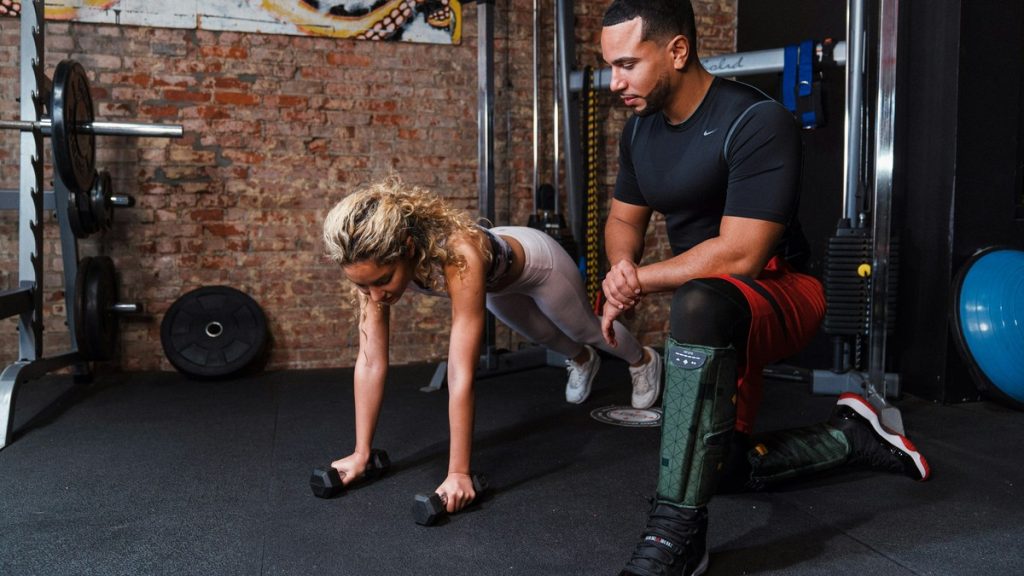
Find accountability. Training with a friend, working with a coach, or simply checking in with someone about your sessions dramatically improves consistency. There’s a reason people with personal trainers show up more reliably — the appointment creates commitment.
What a Real Week Might Look Like
Here’s a sample 3-day full-body routine for a beginner or someone returning after a break:
Monday
- Goblet squat: 3 × 10
- Dumbbell Romanian deadlift: 3 × 10
- Dumbbell bench press: 3 × 10
- Dumbbell row: 3 × 10 each side
- Plank: 3 × 30 seconds
Wednesday
- Bulgarian split squat: 3 × 8 each leg
- Hip thrust: 3 × 12
- Dumbbell overhead press: 3 × 10
- Lat pulldown: 3 × 10
- Dead bug: 3 × 8 each side
Friday
- Barbell back squat or leg press: 3 × 8
- Deadlift: 3 × 6
- Incline dumbbell press: 3 × 10
- Cable or seated row: 3 × 10
- Farmer’s carry: 3 × 30 meters
Each session runs 45–60 minutes with a 5–10 minute warm-up. Track your weights and aim to add a small amount of load or one extra rep every 1–2 weeks.
The Bottom Line
The workout routine that sticks isn’t the most complex one, the most popular one, or the one with the most days. It’s the one you designed around your real life — and showed up for consistently.
Start with what you can actually commit to. Build around the big lifts. Track your progress. Plan for the hard weeks, not just the easy ones.
If you want help putting together a program built around your schedule, your goals, and your current fitness level, that’s exactly what our trainers at Peak Fitness SLO are here for. Book a session and we’ll build something that works for the long haul.
Peak Fitness SLO is a private, full-service gym at 81 Higuera Street, Suite 130, San Luis Obispo. Open 24/7/365 with secure mobile access. Questions? Email hello@PeakFitnessSLO.com or call (805) 329-9086.